5. Lighting Design That Evolves Over Time
Lighting is one of the fastest-dating design elements in shared environments. What feels dramatic or atmospheric at launch can quickly feel outdated as design trends shift.
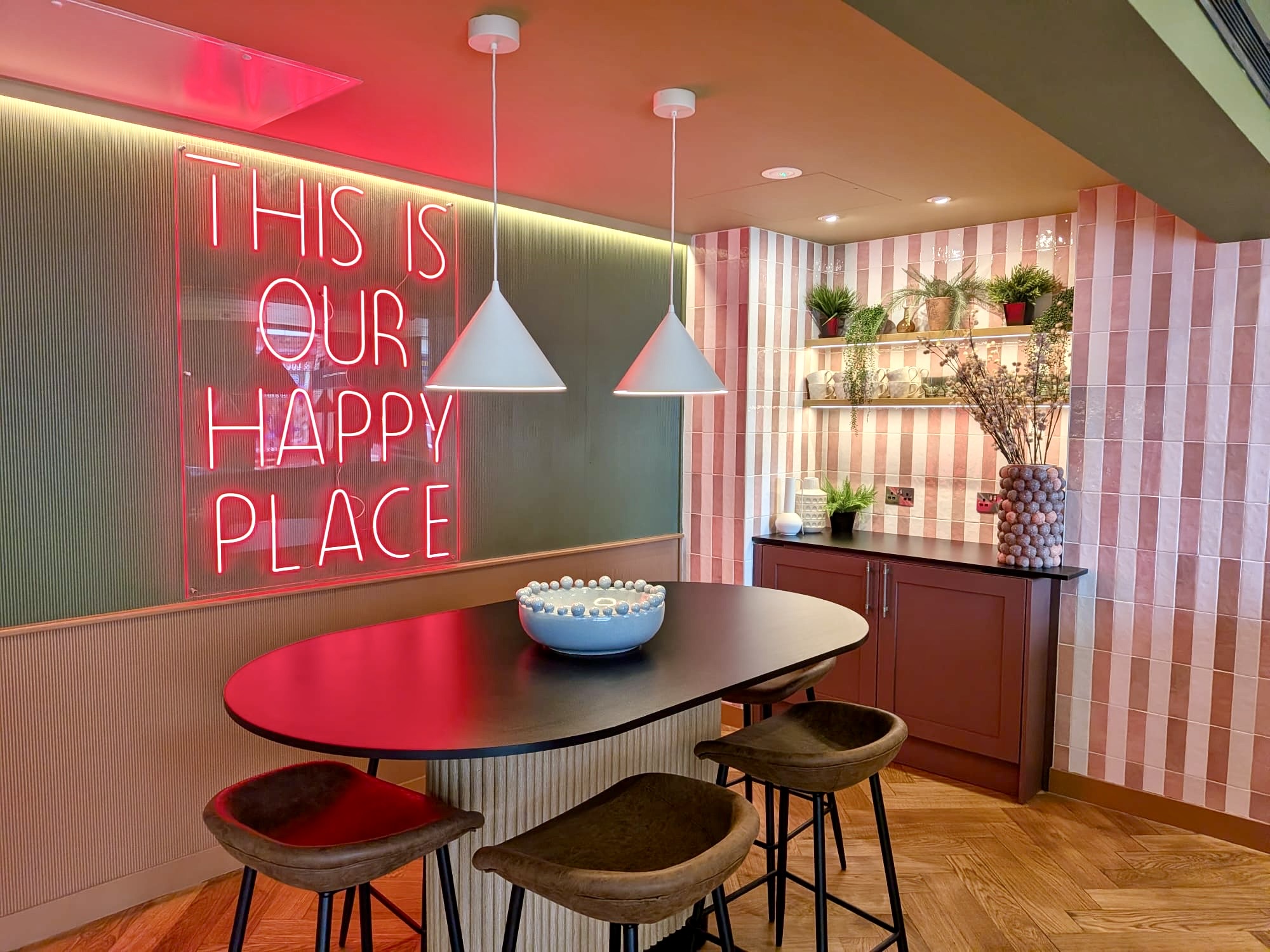
Amenity spaces that age well combine ambient, task and feature lighting, allowing operators to adjust the atmosphere of a space throughout the day. Scene control enables the same environment to transition from study space to social setting without physical changes.
Prioritising warmth, comfort and flexibility over visual drama tends to create spaces that remain appealing for longer. Upgradable lighting systems also allow schemes to improve energy performance over time.
Thoughtful lighting strategies can also reduce long-term operational costs. Selecting durable fittings, energy-efficient LED systems and accessible maintenance points can significantly reduce replacement and servicing requirements over the life of the building.
6. Future-Proofing Technology in Amenity Spaces
Technology ages faster than architecture.
A smarter approach includes portable display systems, adaptable power distribution, scalable WiFi infrastructure, and avoiding overinvestment in fixed tech features.
Designing for plug-and-play upgrades protects long-term capital efficiency.
7. Operational Reality Check
Amenity spaces that age poorly often suffer from cleaning complexity, poor supervision sightlines, and finishes that are difficult to maintain.
From an operational perspective, design decisions need to prioritise visibility, durable acoustic treatments, and surfaces that can be cleaned quickly and regularly.
When these considerations are overlooked, operational costs tend to rise quickly. More intensive cleaning regimes, frequent repairs, and premature replacement of finishes can significantly increase the long-term cost of managing the building.
Good design at the outset helps avoid these issues, allowing spaces to remain attractive and functional without creating unnecessary operational burden for site teams.
8. Designing for Refurbishment Cycles
Amenity spaces should be planned with refurbishment cycles in mind from the outset: a soft refresh around year five, more meaningful reconfiguration at year ten, and technical upgrades as required.
Design choices that allow flooring replacement, modular joinery updates, and efficient summer works can make a significant difference when refurbishment periods arrive.
When buildings are designed without these considerations, upgrades often become more disruptive and expensive than they need to be. Spaces may require partial strip-outs simply because materials, layouts, or services were not designed with future changes in mind.
By contrast, schemes that anticipate refurbishment cycles can refresh spaces more efficiently, reducing downtime during summer works and protecting long-term capital budgets.